How to read this
Six stages, from a quick overview to deep reference.
- 1Start herequick overview
Who he was in one paragraph, the one thing to remember, and how to read the dossier.
- 2Birth, lineage & familydates, village, and nasab
His birth and death dates, the meaning of “Ghotvi,” and the full paternal line of descent.
- 3Learning & the spiritual pathevery teacher, and his bai‘at
The teachers of his dars-e-nizami and each subject, and his oath to Pir Mehr Ali Shah Golarvi.
- 4Teaching, character & Jamia Abbasiathe muhaddith at work
His Hajj and vow, his dawn-to-dusk teaching, his refusal of worldly reward, and his seminary.
- 5The Bahawalpur casethe nine-year litigation
How the marriage case began, the nine years through the courts, the 1935 ruling, and its later echo.
- 6Death, works & legacyafter 1948
His death and burial, his writings and the books written about him, and his lasting legacy.
- 7Referencetimeline, FAQ, sources
A timeline of his life, the FAQ, the key Qur’anic reference, and the full source list.
Fast facts
- Who
- Shaikh al-Islam, Shaikh-ul-Hadith Allama Ghulam Muhammad Muhaddith-e-Ghotvi (غلام محمد گھوٹوی), a Hanafi Ahl al-Sunnah scholar of hadith
- Born
- Jumada al-Ula 1302 AH (January 1885 CE), village of Gamrali Kalan near Mangowala, District Gujrat, Punjab
- Died
- Monday, 27 Rabi al-Thani 1367 AH (8 March 1948 CE), Bahawalpur, aged 65 (Hijri); buried in Qabristan-e-Muluk Shah near the Noor Mahal
- Titles
- Shaikh al-Islam (شیخ الاسلام), Shaikh-ul-Jami‘ah (شیخ الجامعہ), Muhaddith-e-Ghotvi (محدّث گھوٹوی), Bahr-ul-Uloom (بحر العلوم), and Fateh-e-Qadianiyat (فاتحِ قادیانیت, “conqueror of Qadianism”)
- Spiritual guide
- Took bai‘at (بیعت) and received khilafat (خلافت) at the hand of Khwaja Pir Syed Mehr Ali Shah Golarvi (مہر علی شاہ) of Golra Sharif
- Chief work
- Founding Shaikh-ul-Jami‘ah of Jamia Abbasia (جامعہ عباسیہ), Bahawalpur, today the Islamia University of Bahawalpur
- His great case
- The Bahawalpur court case (1926 to 1935): a judicial ruling that Qadianis are murtad (مرتد, apostate) and outside Islam, and that a Muslim-Qadiani marriage is void
- Later echo
- The case was cited when Pakistan’s National Assembly declared the Ahmadiyya a non-Muslim minority on 7 September 1974
On this page
Stage 1/7 · Start here· quick overview
Overview
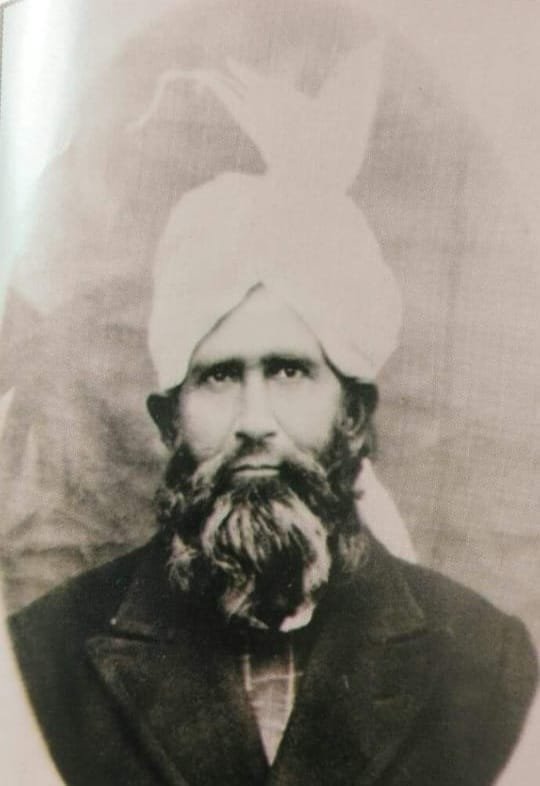
In one paragraph
Shaikh al-Islam, Shaikh-ul-Hadith Allama Ghulam Muhammad Muhaddith-e-Ghotvi (غلام محمد گھوٹوی), 1885 to 1948, was a Hanafi Ahl al-Sunnah (اہل السنّہ) scholar of hadith from the Punjab who is remembered across the subcontinent by a single epithet: Fateh-e-Qadianiyat (فاتحِ قادیانیت), the conqueror of Qadianism. Born in a village of District Gujrat and trained under the great teachers of his age, he took the oath of allegiance (bai‘at, بیعت) at the hand of the celebrated saint Pir Syed Mehr Ali Shah Golarvi (مہر علی شاہ), performed Hajj (حج) in 1911, and gave the rest of his life to the teaching of hadith, first at Muhammad Pur Ghota (from which he takes the name “Ghotvi”, گھوٹوی) and then as the founding head of Jamia Abbasia (جامعہ عباسیہ) in Bahawalpur. His towering achievement was legal as much as scholarly: over nine years he pursued a marriage dispute through the courts of the state of Bahawalpur until, on 7 February 1935, the court ruled that Qadianis are apostates outside the fold of Islam and that a marriage between a Muslim and a Qadiani is null. That judgment became a reference point decades later when Pakistan’s National Assembly declared the Ahmadiyya a non-Muslim minority in 1974.
How to read this dossier
- Birth, lineage and family gives his dates, his village, and the full chain of his nasab (نسب).
- Learning and the spiritual path lists every teacher and subject, and his bai‘at to Pir Mehr Ali Shah Golarvi.
- Teaching, character and Jamia Abbasia covers his life as a muhaddith (محدّث), his refusal of worldly reward, and his seminary.
- The Bahawalpur case narrates the nine-year litigation and the 1935 ruling in full, with every name and date.
- Death, works and legacy covers his passing, the books written about him, and how his case was later invoked in 1974.
- Reference holds a timeline, an FAQ, and the full list of sources.
Stage 2/7 · Birth, lineage & family· dates, village, and nasab
Birth, place, and dates
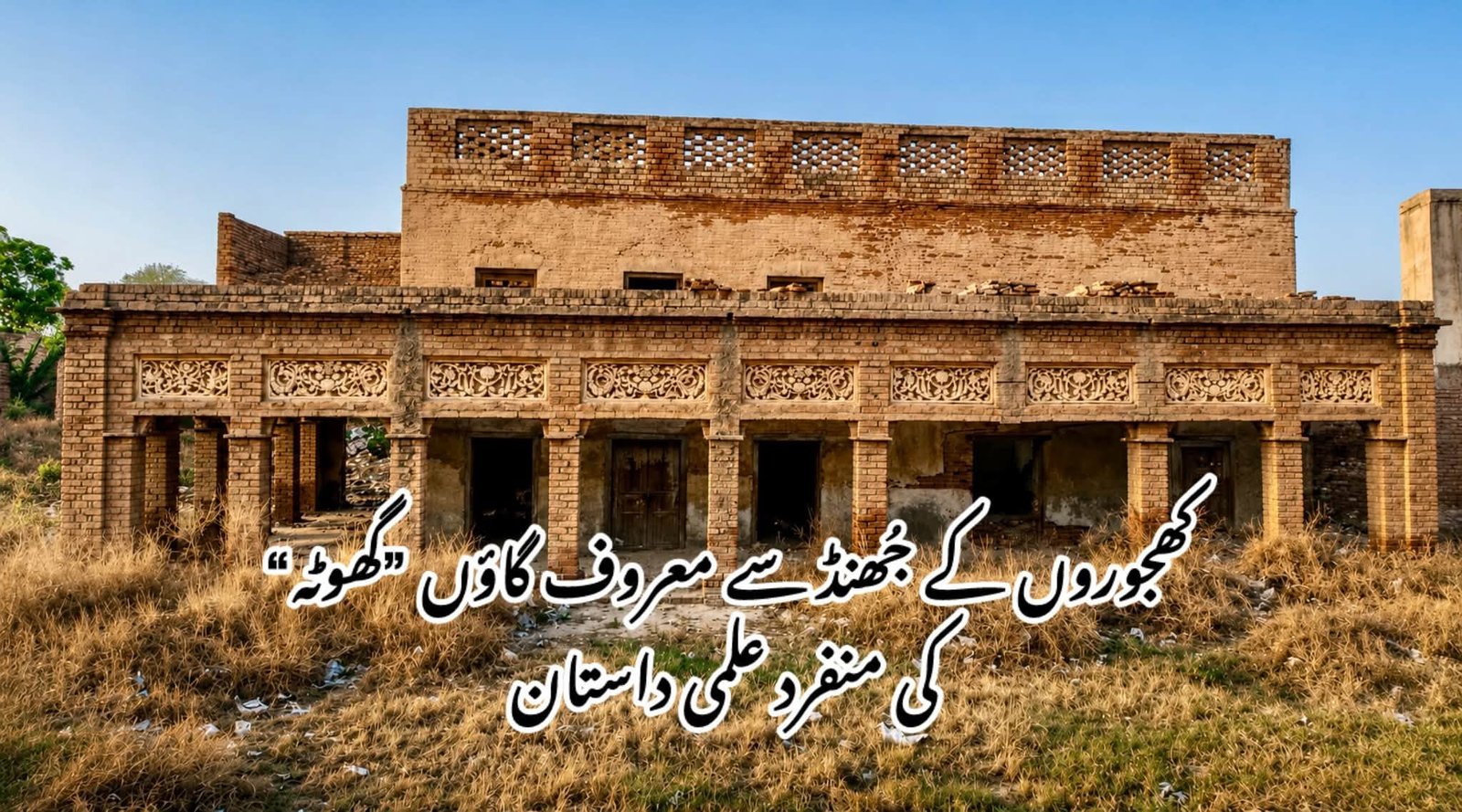
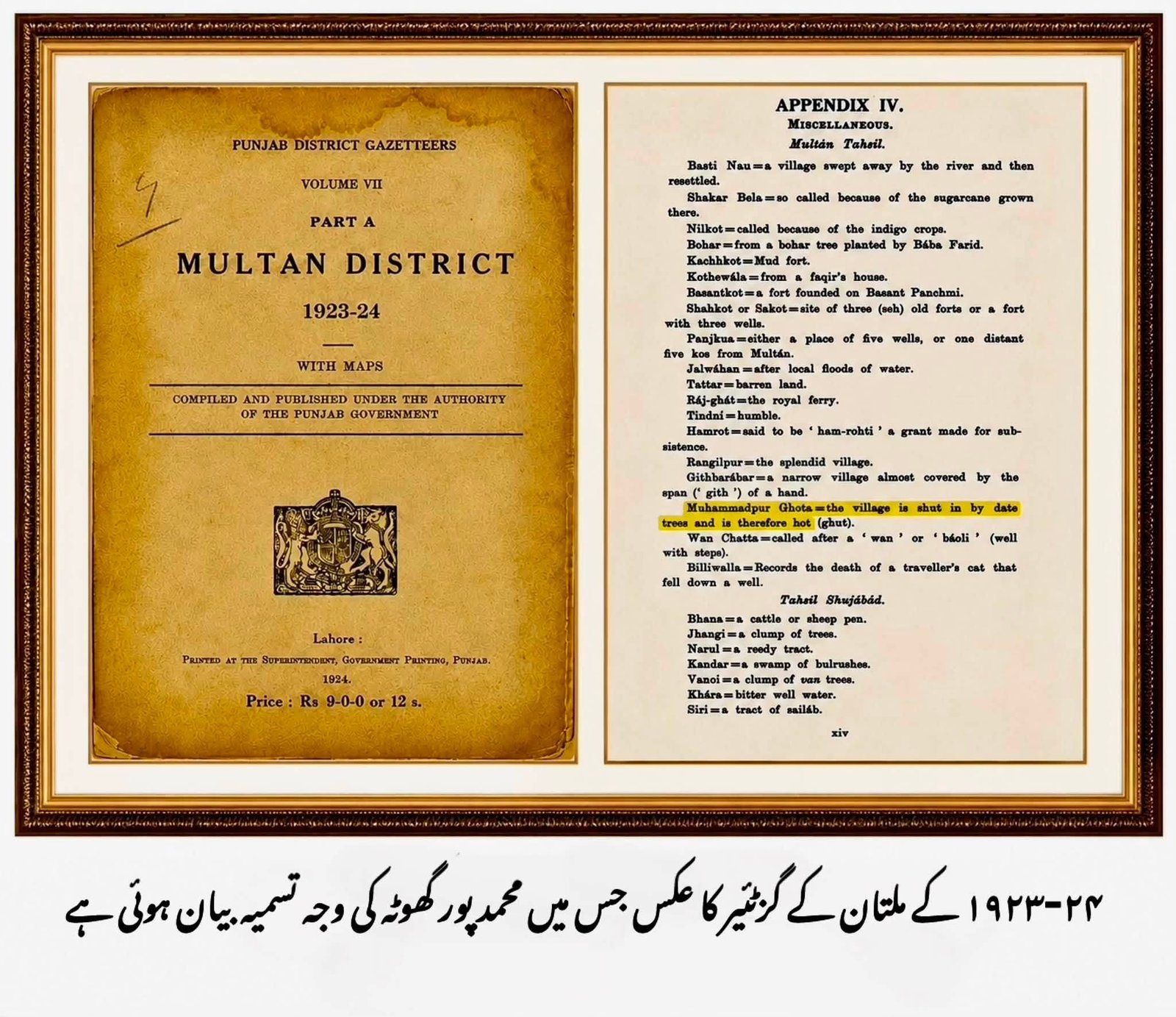
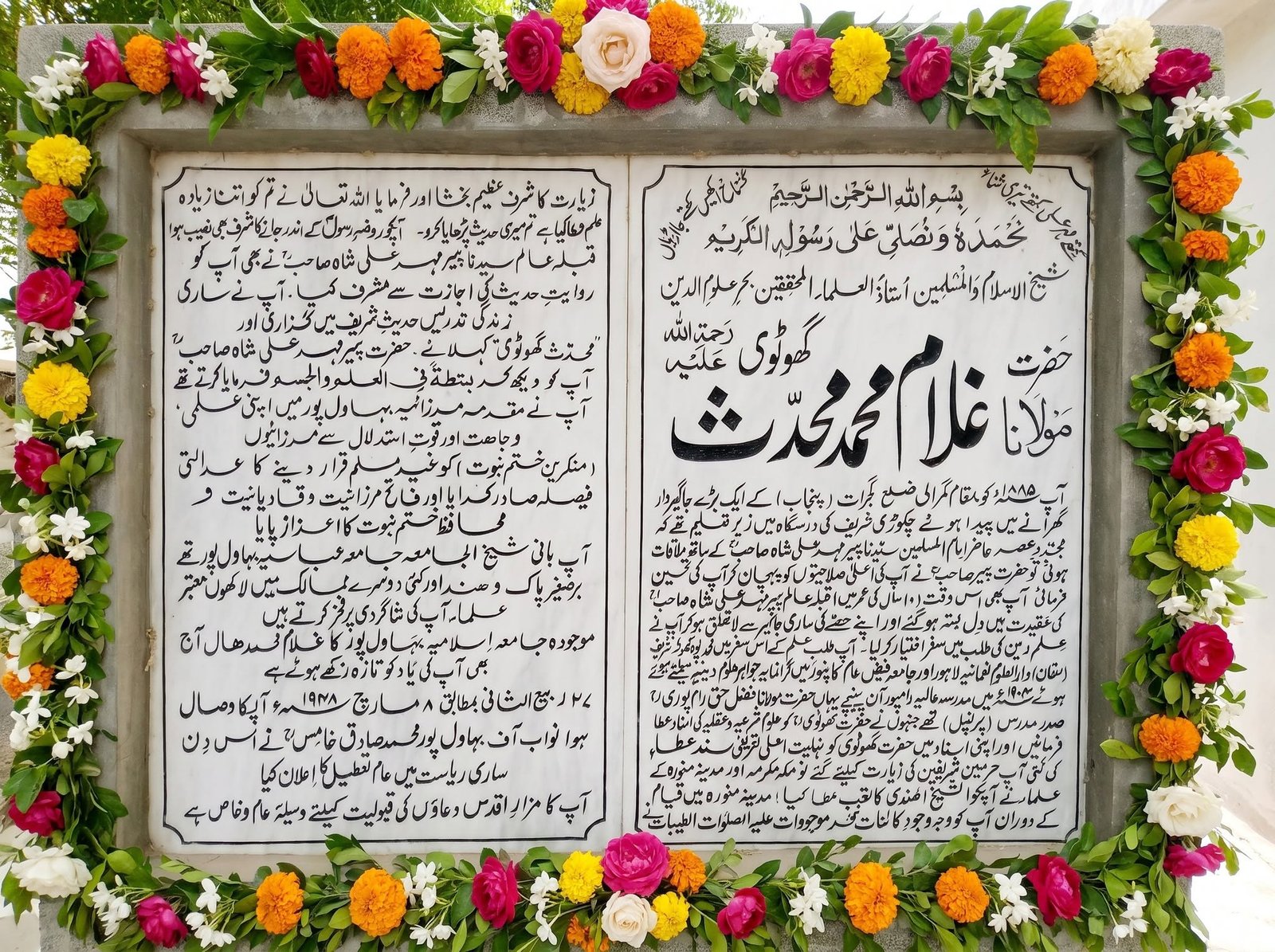
Ghulam Muhammad Ghotvi (غلام محمد گھوٹوی) was born in Jumada al-Ula 1302 AH, corresponding to January 1885 of the common era, in the village of Gamrali Kalan (گمرالی کلاں) near Mangowala (منگووالا) in District Gujrat (ضلع گجرات), Punjab. He died on Monday, 27 Rabi al-Thani 1367 AH, that is 8 March 1948, in Bahawalpur (بہاولپور), at the age of 65 by the Hijri (ہجری) reckoning. He was buried in the Qabristan-e-Muluk Shah (قبرستان ملوک شاہ), the Malik Shah cemetery near the Noor Mahal (نور محل), Bahawalpur.
Lineage and family (nasab)
His nasab (نسب), the paternal line of descent as recorded in the biographies, runs:
- Ghulam Muhammad (غلام محمد) ibn
- Chaudhry Muhammad Abdullah (چوہدری محمد عبد اللہ) ibn
- Sufi Muhammad Khan (صوفی محمد خان) ibn
- Chaudhry Ahmad Yar Khan (چوہدری احمد یار خان) ibn
- Chaudhry Pir Muhammad Khan (چوہدری پیر محمد خان) ibn
- Hazrat Bakht Jamal Khan (بخت جمال خان), from whom the line is traced back to Naushirwan the Just (نوشیروان عادل).
His family belonged to the Kang (or “King”) Jatt (کانگ جٹ) community and was a prominent landowning (jagirdar, جاگیردار) household; on his mother’s side he was connected to the Warraich (وریچ) tribe. The family’s settlement at Muhammad Pur Ghota gave him the surname by which he became famous.
Stage 3/7 · Learning & the spiritual path· every teacher, and his bai‘at
His teachers, and what he learned from each
Ghulam Muhammad Ghotvi (غلام محمد گھوٹوی) received the full classical curriculum of the dars-e-nizami (درسِ نظامی), studying under a series of the leading teachers of northern India. The biographies name them in stages:
Early studies
- Maulana Muhammad Chirag (محمد چراغ) of Chikri, District Gujrat: the memorisation of the Qur’an (hifz, حفظ), Persian (فارسی), and the foundational grammar of sarf and nahw (صرف و نحو, morphology and syntax).
Intermediate studies
- Hafiz Muhammad Jamal (حافظ محمد جمال) of Ghota, in the Multan district: the standard logic and philosophy texts (the Qutbi, قطبی, and Mir Baazi, میر باذی).
- Allama Syed Ghulam Husain (سیّد غلام حسین) of Tileri, Muzaffargarh (مظفرگڑھ): the advanced rational and transmitted sciences.
- Allama Muhammad Zaman (محمد زمان) of Chaki, in the Kamalpur / Attock (اٹک) region. The biographies preserve a story: this teacher at first refused to admit the young Ghulam Muhammad on account of his plain appearance, until the student’s explanation of a difficult passage so impressed him that he took him under special tutelage.
Higher studies
- Jamia Nu‘maniyya (جامعہ نعمانیہ), Lahore, under Allama Ghulam Ahmad Hafizabadi (غلام احمد حافظ آبادی), and Jami Faiz-e-Aam (جامع فیضِ عام), Kanpur.
- Maulana Ahmad Hasan Kanpuri (احمد حسن کانپوری): the higher rational sciences (al-funun al-‘aliya, الفنون العالیہ).
- Madrasa Aliya, Rampur (مدرسہ عالیہ رامپور), from 1903, under Maulana Fazl Haq Rampuri (فضل حق رامپوری), its head teacher (sadr mudarris): the sciences of hadith (حدیث).
- Maulana Wazir Hasan Rampuri (وزیر حسن رامپوری): the science of medicine (tibb, طِبّ) alongside the authentic hadith collections.
The spiritual path: bai‘at to Pir Mehr Ali Shah Golarvi
In the spiritual dimension, Ghulam Muhammad Ghotvi (غلام محمد گھوٹوی) took the oath of allegiance (bai‘at, بیعت) at the hand of the great saint and scholar of Golra Sharif (گولڑہ شریف), Khwaja Pir Syed Mehr Ali Shah Golarvi (خواجہ پیر سیّد مہر علی شاہ گولڑوی). The accounts place their first meeting at the shrine of Chikri Sharif (چکڑی شریف), when Ghotvi was about nineteen, and say the Pir recognised his gifts at first sight. He became one of his devoted disciples, received from him the spiritual succession (khilafat, خلافت), and was also honoured by him with the licence (ijazah, اجازہ) to narrate hadith.
The bond was one of deep mutual regard. Pir Mehr Ali Shah (مہر علی شاہ) held Ghotvi in the highest esteem, consulted him on matters of learning, and on occasion appointed him as his own representative in scholarly disputes, a mark of trust given the elder’s own towering reputation as a defender of orthodox belief against Qadianism. He is remembered as praising his disciple as “bahr fi al-‘ilm wa al-jism” (بحر فی العلم والجسم), an ocean in knowledge and in person.
Stage 4/7 · Teaching, character & Jamia Abbasia· the muhaddith at work
Hajj, and a life given to hadith
In 1911 Ghulam Muhammad Ghotvi (غلام محمد گھوٹوی) performed the Hajj (حج) and visited the city of the Prophet Muhammad ﷺ (محمد). His students report that he considered the direction of his life settled at that visit: he resolved to devote himself wholly to the service of hadith (khidmat-e-hadith, خدمتِ حدیث), and he kept to that resolve for the rest of his years.
میں نے حضور ﷺ سے حکم پایا کہ قرآن اور سنّت کا علم روشن کروں اور قوّتِ ایمان سے منکرینِ ختمِ نبوّت کو شکست دوں“I received the command from the Prophet ﷺ to make the knowledge of the Qur’an and the Sunnah shine, and by the strength of faith to defeat the deniers of the finality of prophethood.” (as related by his student Hafiz Abdul Rahman Jami‘i)
The teacher: dawn to dusk, and “the emperor of teaching”
As a teacher he was tireless. The biographies record that he taught from the Fajr (فجر) prayer through to the Isha (عشاء) prayer, covering the whole range of the Islamic sciences in a single day. His seminary at Ghota (گھوٹہ) grew so celebrated that students travelled to it from across India, Afghanistan (افغانستان), and beyond; on the days when they departed for the holidays, it is said, the queue of students stretched from Ghota to the Multan (ملتان) railway station, filling entire train carriages.
For this he earned honorific after honorific: Bahr-ul-Uloom (بحر العلوم), “the ocean of the sciences”; Shahenshah-e-Tadris (شہنشاہِ تدریس), “the emperor of teaching”; Zinat-ut-Tadris (زینت التدریس), “the adornment of instruction”; and among his admirers Imam-ul-Hind (امام الہند), “the imam of India.” During his visits to the Haramain (الحرمین, the two sanctuaries of Makkah and Madina), the scholars there conferred on him the title Shaikh al-Hindi (شیخ الہندی). He also held honorary principalships at several colleges and madrasas.
His renown reached well beyond Ghota. When Khwaja Mahmud Tonsvi (خواجہ محمود تونسوی), the sajjada-nashin (سجادہ نشین, the custodian) of the shrine at Tonsa Sharif (تونسہ شریف), learned of his learning through a written scholarly exchange, the Jawab al-Jawab (جواب الجواب), in which Ghotvi had answered the objections of Allama Gohar Ali Tonsvi (گوہر علی تونسوی), he invited Ghotvi to teach his own sons; Ghotvi accepted on the command of his Pir.
He was also an accomplished poet. Trained in the literary air of Rampur (رامپور), then called the nursery of Urdu poetry, he took part in poetic gatherings (mushairas, مشاعرے) and won particular fame for his na‘t (نعت), verse in praise of the Prophet Muhammad ﷺ (محمد); he also composed odes (qasa’id, قصائد) honouring his teachers. He left a diwan (دیوان, a collected volume of his poetry), which remained behind with someone in Rampur.
Character: an ocean of knowledge, and no appetite for the world
What the sources dwell on as much as his learning is his humility. Despite being called an ocean of the sciences, Ghulam Muhammad Ghotvi (غلام محمد گھوٹوی) was known as deeply modest and self-effacing. He held scholars and the righteous (‘ulama and sulaha, علماء و صلحاء) in the greatest honour, and he never once turned his knowledge to worldly gain.
In person he was tall and imposing: those who saw him recall a man of around six and a half feet, of dignified bearing, in a white turban and a grey shawl, the physical echo of his Pir’s praise of him as “an ocean in knowledge and in person.”
- He refused the lucrative posts and stipends pressed on him by princes and nobles, preferring a modest life of service in the small town of Ghota.
- He treated his students with fatherly affection, and lived with a dignity that owed nothing to patronage.
- He measured his life by a saying he loved to cite from the Prophet Muhammad ﷺ (محمد), on seeking knowledge until one becomes, in effect, a firmly fixed axis of guidance for others.
The Khilafat Movement, and a night escape
Ghotvi was also drawn into the great political cause of his generation, the Khilafat Movement (تحریکِ خلافت). When the British moved to dismantle what remained of the Ottoman (Turkish) Caliphate after the First World War, Indian Muslims organised under the banner of the Khilafat Committee (خلافت کمیٹی) to resist, and part of that campaign was to stop Muslims enlisting in the British Indian army.
Ghotvi threw himself into it. He delivered forceful speeches against army recruitment throughout Multan Cantonment (ملتان چھاؤنی) and the districts around it, and, his biography records, some thirteen to fourteen hundred recruits resolved to leave the service as a result. The colonial government responded by opening a case against him and ordering the Deputy Commissioner of Multan to act.
Jamia Abbasia, Bahawalpur
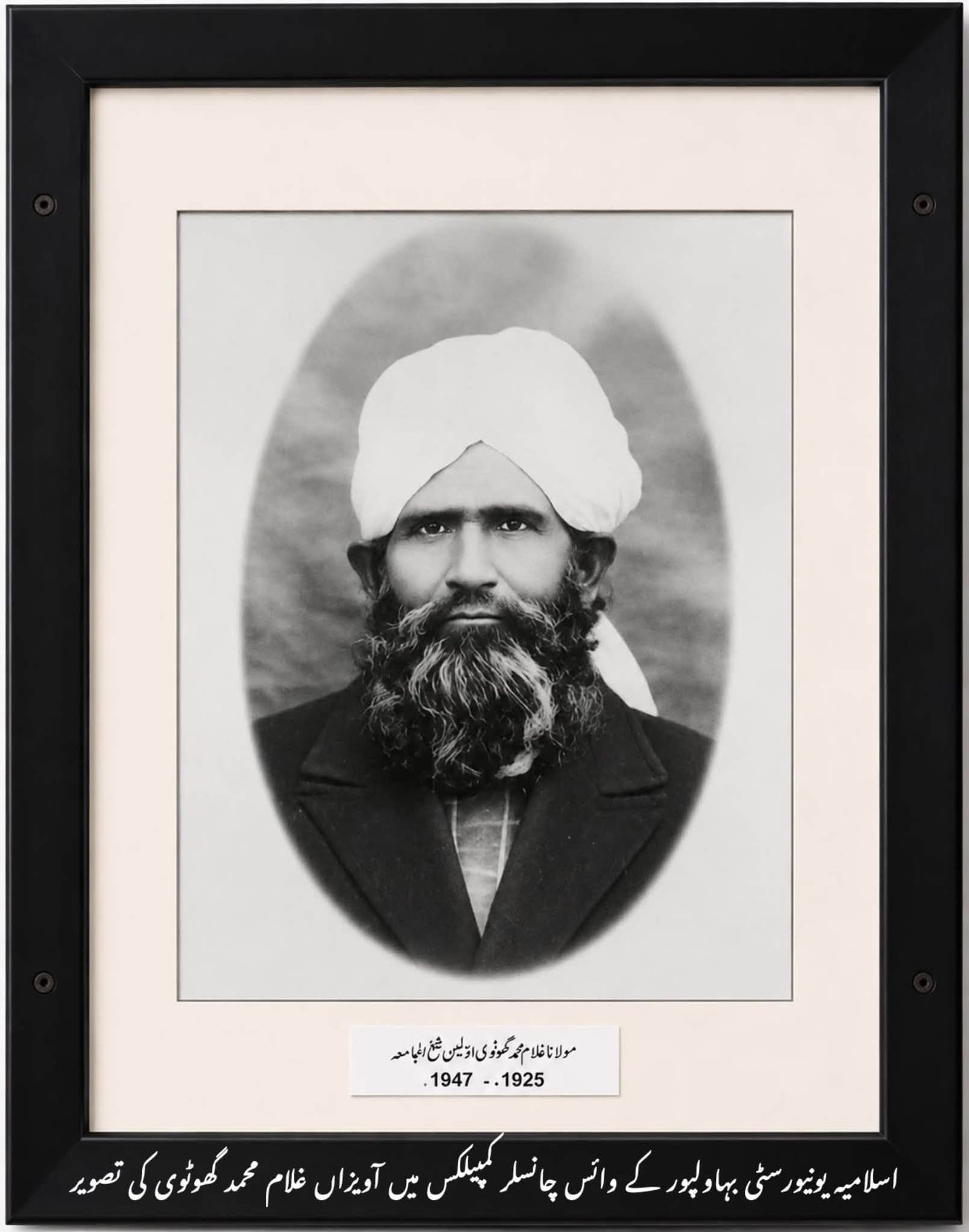
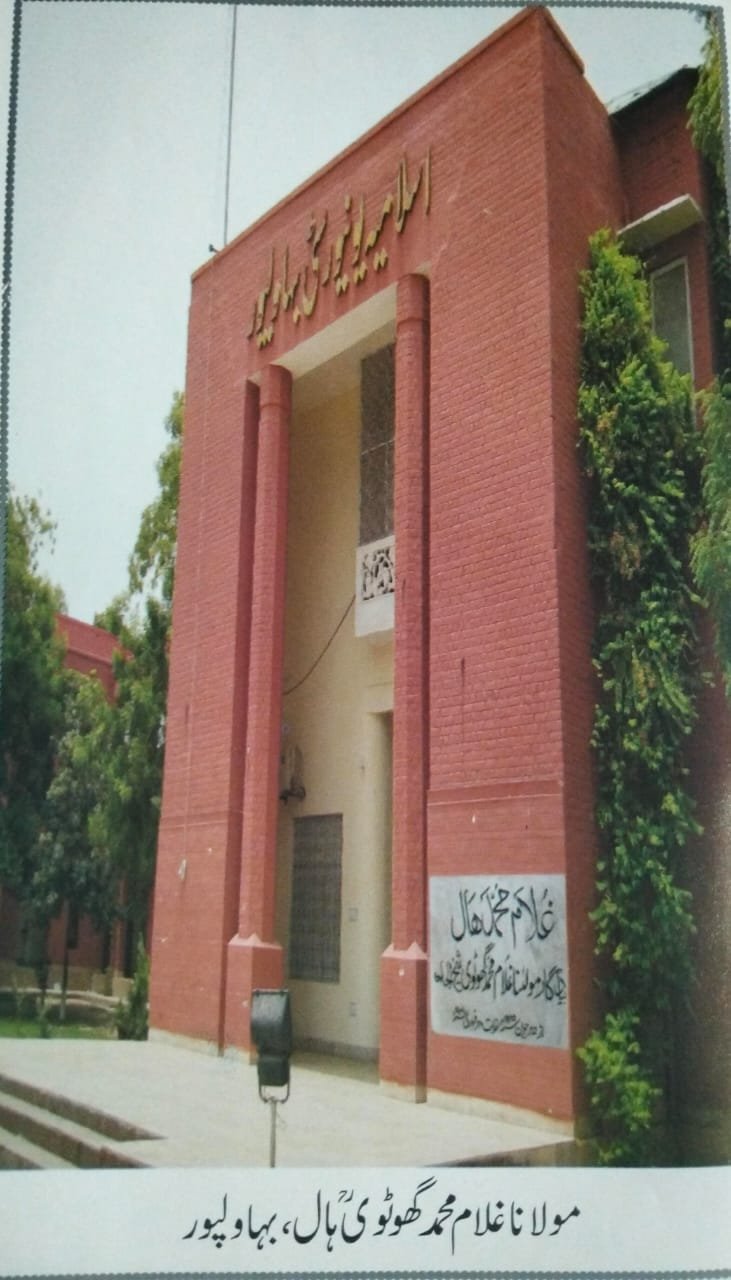
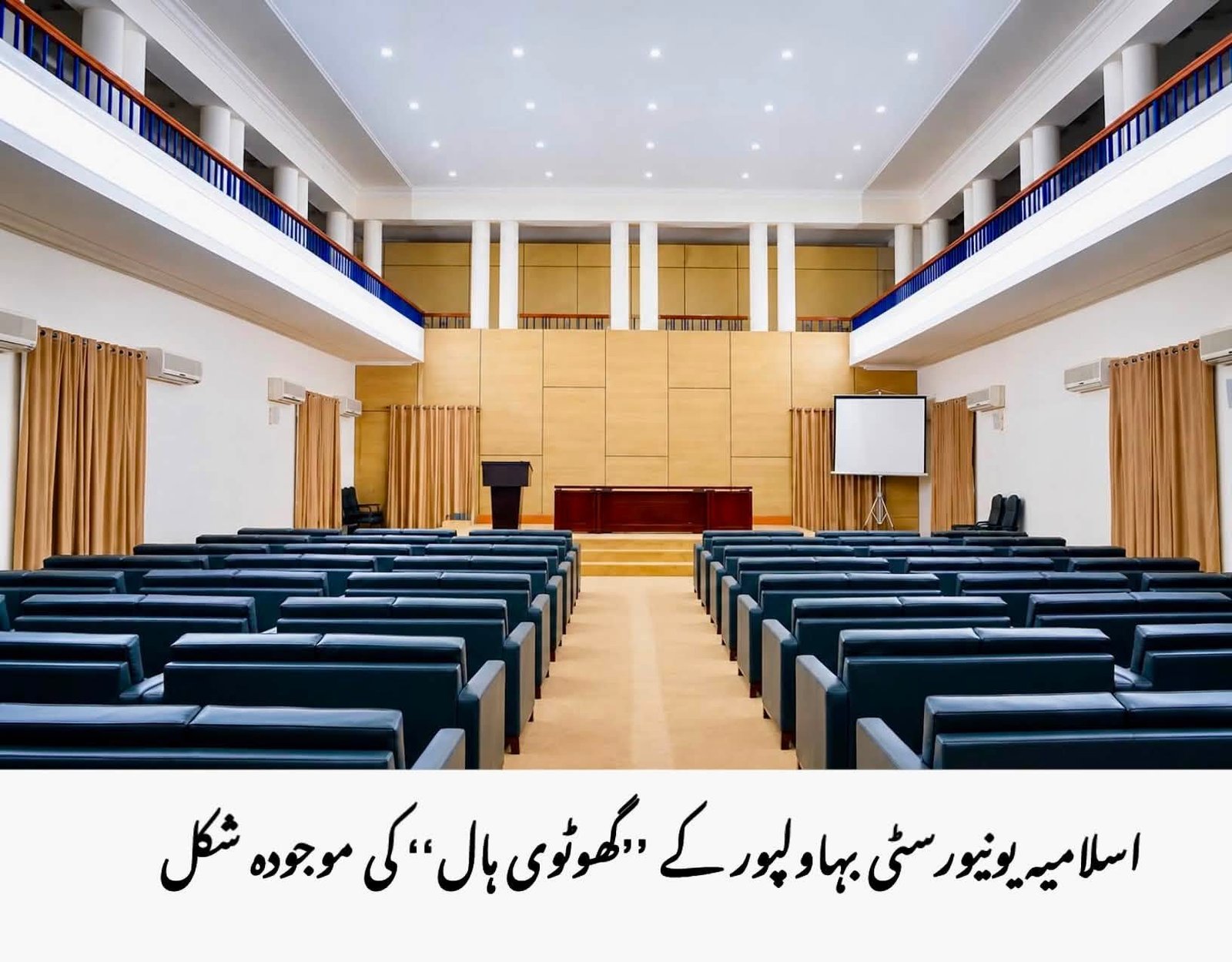
The institution most bound to his name is Jamia Abbasia (جامعہ عباسیہ) in Bahawalpur (بہاولپور), the great seminary of the princely state, of which he served as the founding Shaikh-ul-Jami‘ah (شیخ الجامعہ), its head and, in effect, its first vice-chancellor. He inaugurated it on 25 June 1925, the opening ceremony held in the seminary’s own hall; its English name was “The Arabic University of Bahawalpur.” He led it from 1925 until 1947. Characteristically, he at first declined the post, holding that it was improper to draw a government salary for teaching the religion, and accepted only when it was made clear that the seminary was funded not from the state treasury but by the Waqf (وقف, religious-endowment) department of the autonomous state of Bahawalpur. The Nawab held him in such regard that he made him Shaikh-ul-Islam of the state and, by some accounts, its minister of education. Jamia Abbasia is today part of the Islamia University of Bahawalpur (اسلامیہ یونیورسٹی بہاولپور), one of Pakistan’s oldest universities, which still preserves his memory: a hall on its campus bears his name.
Stage 5/7 · The Bahawalpur case· the nine-year litigation
The case that made his name: how it began
Ghotvi confronted the Qadiani (قادیانی) movement in open debate well before he took it to court: one such encounter was a two-day disputation (munazara, مناظرہ) with Qadiani representatives at Herya (حریا), District Gujrat, on 18 and 19 October 1924.
But the act for which he is above all remembered was neither a debate nor a book: it was a lawsuit. It grew out of a single marriage. A woman named Ghulam Aisha (غلام عائشہ), daughter of Maulvi Ilahi Bakhsh (الٰہی بخش), had been married to her cousin Abdul Razzaq (عبد الرزاق). Before the marriage was consummated, Abdul Razzaq converted to the Qadiani (قادیانی) movement, the followers of Mirza Ghulam Ahmad (مرزا غلام احمد, d. 1908) of Qadian. When he then claimed his marital rights, Ghulam Aisha refused, on the ground that a Qadiani is an apostate (murtad, مرتد) and that a Muslim woman cannot remain in the marriage of one who has left Islam.
The Qadiani side resisted, insisting the marriage remained valid, and, crucially, they enjoyed the sympathy of the British colonial administration. What might have been a private family matter became a test case on the single question the whole controversy turned on: are Qadianis, in law, Muslims or not?
Nine years through the courts
The suit was filed on 24 July 1926 in the tehsil court of Ahmadpur Sharqia (احمد پور شرقیہ), in the state of Bahawalpur. It moved slowly and through several forums: after the tehsil and district courts, an appeal was carried to the Chief Court of Bahawalpur (چیف کورٹ), and the matter was finally heard, with a full shar‘i (شرعی) inquiry, in the District and Sessions Court of Bahawalpur. The judgment did not come until 7 February 1935, nearly nine years after the filing.
Through those years Ghulam Muhammad Ghotvi (غلام محمد گھوٹوی), as the Shaikh-ul-Jami‘ah (شیخ الجامعہ) of Jamia Abbasia, was the pivot of the Muslim side. He pressed the seriousness of the matter on the state’s ministers, marshalled the scholarly evidence that Qadiani belief is incompatible with Islam through reasoned proof (dalil, دلیل) rather than mere assertion, and, as the next section describes, gathered the scholars who would argue it in court.
The Nawab who stood firm, and the scholars Ghotvi gathered
The case did not rest on Ghulam Muhammad Ghotvi (غلام محمد گھوٹوی) alone. It became the cause of the whole Islamic state of Bahawalpur, and of a remarkable gathering of scholars that he helped to convene. Three circles of support stand out in the accounts.
The Nawab, Sadiq Muhammad Khan V
Bahawalpur (بہاولپور) was an Islamic princely state, and its ruler, Nawab Sir Sadiq Muhammad Khan V Abbasi (نواب صادق محمد خان خامس عباسی), is described in the accounts as a true Muslim and a lover of the Prophet Muhammad ﷺ (محمد). He was devoted to the memory of the great saint of the region, Khwaja Ghulam Farid (خواجہ غلام فرید), and all of Khwaja Ghulam Farid’s spiritual successors (khulafa, خلفاء) took a close interest in the case. When the British government pressed the Nawab to have the suit quashed, he refused to yield.
The scholars Ghotvi called
As the Shaikh-ul-Jami‘ah of Jamia Abbasia and a devotee of Pir Mehr Ali Shah Golarvi (مہر علی شاہ), Ghotvi was the local pivot of the effort; but for the courtroom representation of the ummah, the choice fell on the Deobandi imam of hadith, Shaikh al-Islam Maulana Sayyid Muhammad Anwar Shah Kashmiri (انور شاہ کشمیری). At Ghotvi’s invitation, Anwar Shah Kashmiri cancelled all his engagements and came to Bahawalpur. He had set out for Dabhel (ڈابھیل), he said, but turned instead to Bahawalpur in the hope that standing as an advocate of the Prophet Muhammad ﷺ (محمد) might be a cause of his forgiveness, “for if we do not do the work of guarding the finality of prophethood, then even a street dog is better than us.”
His arrival turned the attention of the whole of India to the case. Around him gathered a panel of scholars who gave faith-strengthening, refutation-filled testimony: Maulana Abul Wafa Shah Jahanpuri (ابو الوفا شاہ جہانپوری), who acted as the plaintiff’s attorney (mukhtar, مختار); Mufti Muhammad Shafi (مفتی محمد شفیع); Maulana Murtaza Hasan Chandpuri (مرتضیٰ حسن چاندپوری); Maulana Muhammad Husain Kolotarrvi (محمد حسین کولوتارڑوی); Maulana Najmuddin (نجم الدین); and Ghotvi himself. It was, in the words of one witness, as if in that court it was not Anwar Shah Kashmiri who spoke, but an advocate of the Messenger of Allah ﷺ.
The ruling of 7 February 1935
On 3 Dhu al-Qa‘da 1353 AH, which is 7 February 1935, the District and Sessions Court of Bahawalpur delivered its judgment. Written by Judge Muhammad Akbar Khan (محمد اکبر خان), whom the biographers praise for the care and justice of his reasoning, and who resisted every inducement the Qadiani side offered him, the ruling held:
قادیانی مرتد ہیں اور دائرۂ اسلام سے خارج ہیں، اور کسی مسلمان کا قادیانی سے نکاح باطل ہے“Qadianis are apostates and outside the fold of Islam, and a marriage between a Muslim and a Qadiani is void.”
The judgment was reasoned so thoroughly that the Qadiani side, gathering under their leader Mirza Bashir-ud-Din Mahmud Ahmad (مرزا بشیر الدین محمود) together with Zafarullah Khan (ظفر اللہ خان), considered an appeal but concluded that the ruling rested on foundations too firm to overturn, and let it stand. It was the fruit of nine years of labour, and it earned Ghulam Muhammad Ghotvi (غلام محمد گھوٹوی) the title by which he is still known: Fateh-e-Qadianiyat (فاتحِ قادیانیت), the conqueror of Qadianism, and Qati‘-e-Ahmadiyyat wa Mirza’iyyat (قاطعِ احمدیت و مرزائیت), the severer of the Ahmadiyya and Mirza’i claim.
From a marriage court to a national law
The Bahawalpur ruling long outlived the marriage that occasioned it. Nearly forty years later, when the National Assembly of Pakistan (قومی اسمبلی) debated whether to declare the Ahmadiyya (احمدیہ) a non-Muslim minority, the arguments, citations, and precedent of the Bahawalpur case were drawn upon in the deliberations. On 7 September 1974 the Assembly passed the amendment that declared Ahmadis, in the constitution of Pakistan, to be non-Muslims.
That is why the biographies treat the 1935 judgment as the single most consequential act of Ghotvi’s life: a scholar in a princely court, working through the patient, unglamorous instrument of a civil suit, laid down a legal precedent that a whole nation would later build upon.
Stage 6/7 · Death, works & legacy· after 1948
Death and burial
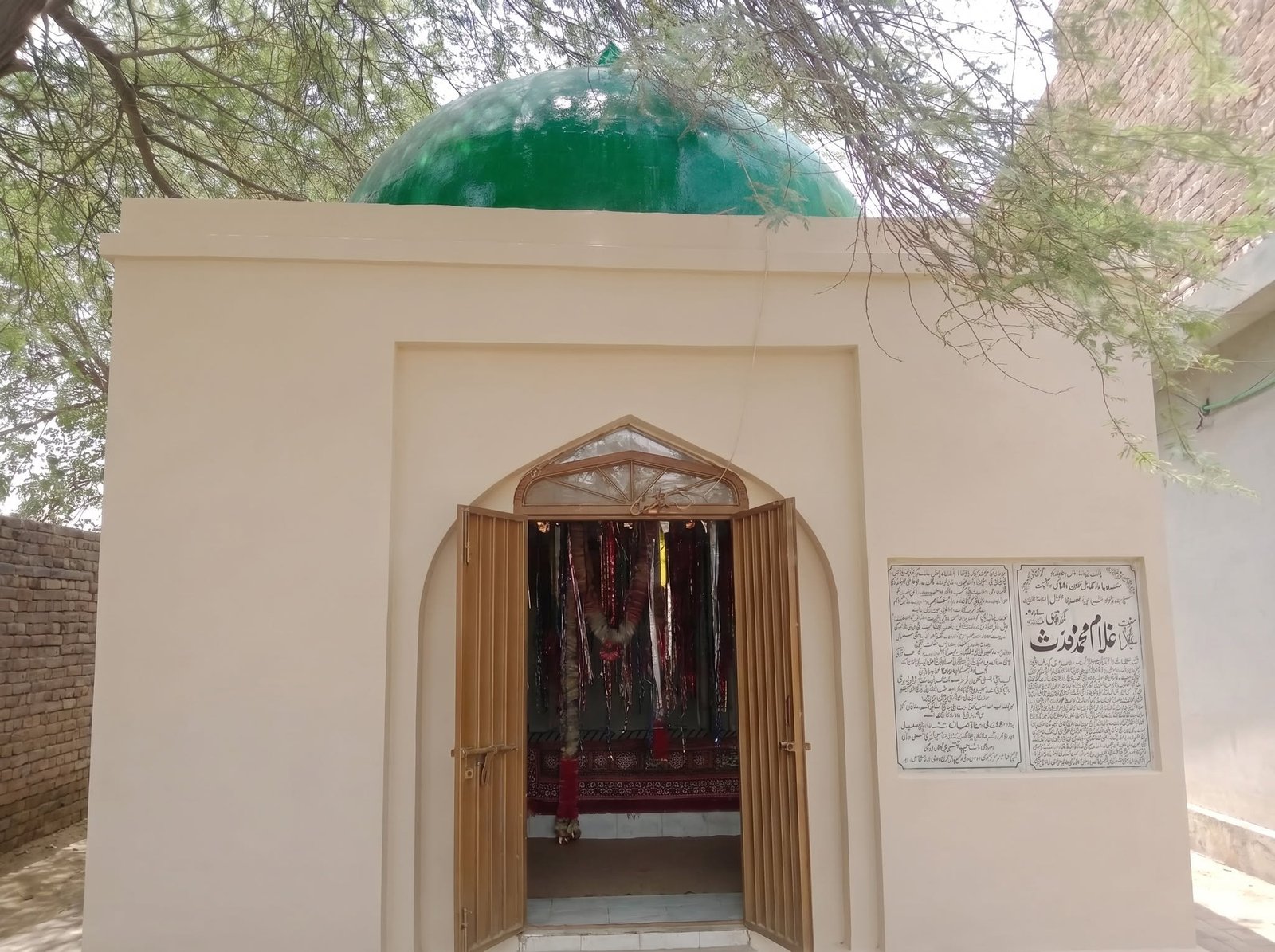
Ghulam Muhammad Ghotvi (غلام محمد گھوٹوی) died on Monday, 27 Rabi al-Thani 1367 AH, that is 8 March 1948, in Bahawalpur (بہاولپور), a few months after the birth of Pakistan. He was 65 years old by the Hijri (ہجری) calendar. He was buried in the Qabristan-e-Muluk Shah (قبرستان ملوک شاہ), the cemetery near the Noor Mahal (نور محل) in Bahawalpur, where his grave remains a place of visitation. On the day of his passing, Nawab Sadiq Muhammad Khan V (نواب صادق محمد خان خامس) declared a general public holiday throughout the state of Bahawalpur in his honour.
His writings and the books written about him
Ghotvi’s energies went above all into teaching, litigation, and the defence of belief, but he also left a number of written works. His detailed biography records among his own compositions (tasanif, تصانیف):
- Sawanih-e-Hayat Hazrat Mehr Ali Shah Golarvi (سوانحِ حیات حضرت مہر علی شاہ گولڑوی): a biography, in his own hand, of his spiritual master.
- Mu‘ayina bila Shaib (معائنہ بلا شیب): a treatise on the question of the knowledge of the unseen (‘ilm al-ghayb, علم الغیب).
- Zafar al-Haqq wa al-Sidaqa (ظفر الحق والصداقة): a work of theology (kalam, کلام) written to defend the position of his teacher Maulana Fazl Haq Rampuri (فضل حق رامپوری) against the objectors of the age.
- Takmila Fawa’id Rafi‘iya (تکملہ فوائدِ رفیعیہ): a completion, composed in 1329 AH (around 1911), of a commentary on the classical Arabic-grammar primer al-‘Awamil (العوامل).
His wider legacy is carried by his students, his court victory, and the biographical literature that later generations produced about him:
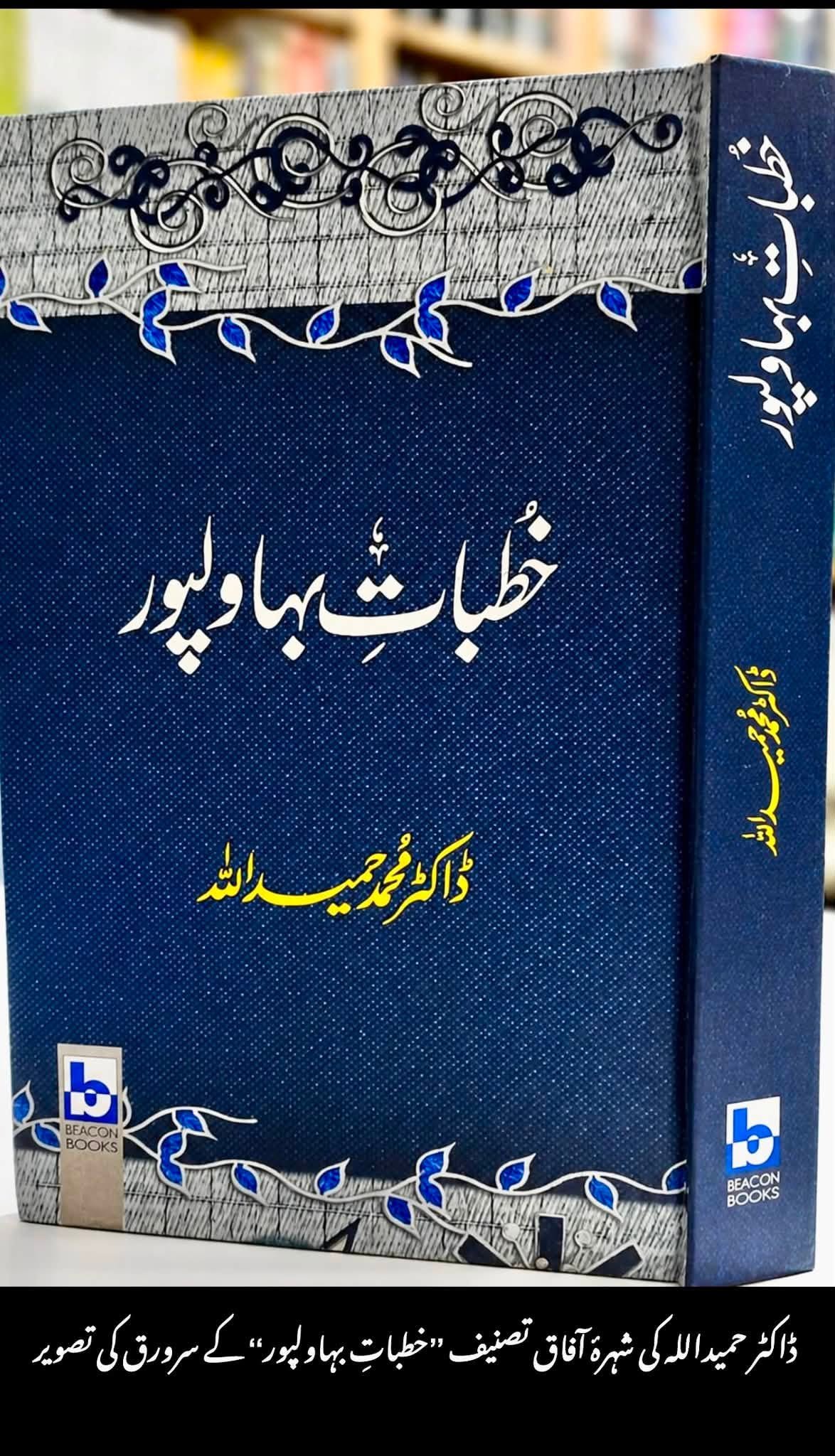
- Shaikh-ul-Islam Ghulam Muhammad Muhaddith-e-Ghotvi: Shakhsiyat wa Afkar (شخصیت و افکار, “Personality and Thought”), by Professor Hafiz Ghulam Naseer-ud-Din Mehri, published 2018: a study of his character and ideas.
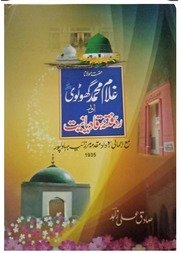
- Maulana Ghulam Muhammad Ghotavi aur Fitna-e-Qadyaniyat (مولانا غلام محمد گھوٹوی اور فتنۂ قادیانیت, “Maulana Ghulam Muhammad Ghotvi and the Trial of Qadianism”), by Sadiq Ali Zahid.
- His life is also recorded in the standard biographical dictionaries of the Ahl al-Sunnah, notably Tazkira-e-Akabir-e-Ahl-e-Sunnat (تذکرہ اکابر اہل سنّت) and the dedicated Hayat-e-Shaikh-ul-Islam Muhaddith-e-Ghotvi (حیاتِ شیخ الاسلام محدّث گھوٹوی).
Legacy
The measure of Ghulam Muhammad Ghotvi (غلام محمد گھوٹوی) is threefold. As a muhaddith (محدّث) and teacher he trained generations of students who carried his learning across the Muslim world. As a disciple and khalifa (خلیفہ) of Pir Mehr Ali Shah Golarvi (مہر علی شاہ), he stood in the front rank of the Ahl al-Sunnah (اہل السنّہ) defence of orthodox belief. And as the man behind the 1935 Bahawalpur ruling, he gave that defence a permanent legal form. The Islamia University of Bahawalpur that grew out of his Jamia Abbasia, and the hall on its campus that bears his name, keep that memory alive on the ground where he worked.
Stage 7/7 · Reference· timeline, FAQ, sources
Timeline at a glance
| Date | Event |
|---|---|
| Jumada al-Ula 1302 AH / January 1885 | Born at Gamrali Kalan, near Mangowala, District Gujrat, Punjab |
| 1911 | Performs Hajj, visits Madinah, and resolves to devote his life to the service of hadith |
| 18 and 19 October 1924 | Debates Qadiani representatives over two days at Herya, District Gujrat |
| 25 June 1925 | Inaugurates Jamia Abbasia (the Arabic University of Bahawalpur) as its founding Shaikh-ul-Jami‘ah |
| 24 July 1926 | Ghulam Aisha bint Ilahi Bakhsh files the annulment suit at the Ahmadpur Sharqia court, Bahawalpur State |
| 1926 to 1934 | The suit is contested through the Bahawalpur courts: the tehsil and district courts, an appeal in the Chief Court, and the District & Sessions Court; Ghotvi convenes a panel of scholars and invites Anwar Shah Kashmiri |
| 3 Dhu al-Qa‘da 1353 AH / 7 February 1935 | Judge Muhammad Akbar Khan rules Qadianis apostate and outside Islam; a Muslim-Qadiani marriage is void |
| 27 Rabi al-Thani 1367 AH / 8 March 1948 | Dies at Bahawalpur, aged 65 (Hijri); buried in Qabristan-e-Muluk Shah near the Noor Mahal |
| 7 September 1974 | Pakistan’s National Assembly declares the Ahmadiyya a non-Muslim minority, drawing on the Bahawalpur precedent |
| 1975 | Jamia Abbasia becomes the Islamia University of Bahawalpur; a hall is named the Ghulam Muhammad Ghotvi Hall |
| 3 May 2016 | The Islamia University of Bahawalpur holds a commemorative conference in the hall named after him |
| 16 September 2025 | The Islamia University of Bahawalpur holds a one-day national seminar on his services at the Ghotvi Hall |
Questions and answers
The FAQ below is also fed to the page’s structured data. It restates the key facts in brief.
Frequently asked questions
Who was Shaikh-ul-Hadith Allama Muhammad Ghotvi?
He was Shaikh al-Islam Ghulam Muhammad Muhaddith-e-Ghotvi (غلام محمد گھوٹوی), 1885 to 1948, a Hanafi Ahl al-Sunnah scholar of hadith from District Gujrat in the Punjab. He is best known as Fateh-e-Qadianiyat, the scholar who obtained the 1935 Bahawalpur court ruling that Qadianis are outside the fold of Islam.
Why is he called “Ghotvi”?
The name comes from the town of Muhammad Pur Ghota (محمد پور گھوٹہ) in the Multan district, where he settled and taught for much of his life. He became known as “the Muhaddith of Ghota.”
Who was his spiritual guide?
He took the oath of allegiance (bai‘at) and received spiritual succession (khilafat) at the hand of Khwaja Pir Syed Mehr Ali Shah Golarvi (مہر علی شاہ) of Golra Sharif, the celebrated saint and defender of orthodox belief against Qadianism.
What was the Bahawalpur court case?
It was a marriage dispute (filed 24 July 1926) in which a Muslim woman, Ghulam Aisha, refused to remain married to a man who had become a Qadiani. Ghotvi pursued it for nine years until, on 7 February 1935, the Chief Court of Bahawalpur ruled that Qadianis are apostates outside Islam and that a Muslim-Qadiani marriage is void.
How is the case connected to the 1974 declaration in Pakistan?
When Pakistan’s National Assembly debated declaring the Ahmadiyya a non-Muslim minority, the arguments and precedent of the 1935 Bahawalpur case were drawn upon. The Assembly passed that declaration on 7 September 1974.
What was his connection to the Islamia University of Bahawalpur?
He was the founding Shaikh-ul-Jami‘ah (head) of Jamia Abbasia in Bahawalpur, the seminary that grew into the Islamia University of Bahawalpur. A hall on the campus is named after him, and the university held a commemorative conference for him in 2016.
Qur’anic references
Sources & further reading
- غلام محمد گھوٹوی, Urdu Wikipedia (biography, lineage, teachers, and the court case)
- شیخ الاسلام حضرت غلام محمد محدّث گھوٹوی, scholars.pk (detailed biography and sources)
- Shaikh-ul-Islam Ghulam Muhammad Muhaddith-e-Ghotvi: Shakhsiyat wa Afkar, by Prof. Hafiz Ghulam Naseer-ud-Din Mehri (2018), Internet Archive
- Maulana Ghulam Muhammad Ghotavi aur Fitna-e-Qadyaniyat, by Sadiq Ali Zahid, Internet Archive
- Roznama Dunya: report of the 2016 commemorative conference at Islamia University Bahawalpur
- Hamariweb: “Ilm o Irfan ka Aftab o Mahtab: Hazrat Allama Ghulam Muhammad Ghotvi” (source of the portrait photograph on this page)
- Tohed: the full text of the Bahawalpur Qadiani case judicial decision (the 7 February 1935 judgment)
- Irshad.org: “Divorce Case Concluding Qadianis are Apostate and Murtad”, an English account of the 1935 Bahawalpur case
- YouTube: “Maulana Ghulam Muhammad Ghotvi: Tajdar-e-Khatm-e-Nubuwwat” (video tribute)
- Facebook: “Hazrat Ghulam Muhammad Ghotvi (rah)”, the authentic page dedicated to him (source of the shrine and portrait photographs)
- Islamia University of Bahawalpur (official): “An article on the first Shaikh-ul-Jami‘ah of Jamia Abbasia, Hazrat Maulana Ghulam Muhammad Ghotvi (ra)”
- Khatm-e-Nabuwwat (khatmenabuwat.pk): biographical article on Ghulam Muhammad Ghotvi
- Instagram (Islamia University of Bahawalpur): announcement of the 16 September 2025 seminar on his services
- Tazkira-e-Akabir-e-Ahl-e-Sunnat (printed biographical dictionary), cited by scholars.pk
- Hayat-e-Shaikh-ul-Islam Muhaddith-e-Ghotvi (printed biography), cited by scholars.pk